Medical research has experienced a revolution that would’ve seemed impossible just a few decades ago. What used to require years of meticulous, hands-on work can now be completed in weeks, sometimes even days, thanks to sophisticated tools that have completely reshaped how scientists tackle disease and treatment development. Picture this: artificial intelligence algorithms predicting drug interactions before a single test tube is touched, or advanced imaging systems capturing cellular processes as they happen in real-time. Technology isn’t just helping medical research anymore, it’s become the very foundation of modern medical discovery.
Advanced Computing Power and Data Analysis
The explosion in computing power has completely changed the game for medical researchers wrestling with mountains of biological data. Today’s supercomputers run incredibly complex simulations that model everything from disease progression to drug interactions with striking accuracy. These computational powerhouses let scientists test thousands of “what if” scenarios without ever setting foot in a wet lab, conserving both time and resources while pinpointing the most promising research directions. Machine learning algorithms excel at spotting patterns buried within massive datasets, patterns that human researchers would never catch manually, no matter how many hours they spent analyzing spreadsheets.
Artificial Intelligence in Drug Discovery
Artificial intelligence has burst onto the pharmaceutical scene as a genuine game-changer, dramatically shortening the notoriously lengthy drug discovery timeline. AI-powered platforms virtually screen millions of molecular compounds, predicting which candidates will most effectively target specific disease mechanisms while keeping side effects to a minimum. These systems digest vast databases of chemical structures, biological interactions, and clinical trial results, identifying promising drug candidates that conventional methods might’ve completely missed. Deep learning algorithms can forecast how potential drug molecules will interact with target proteins, fold into three-dimensional structures, and behave once they’re inside biological systems.
Revolutionary Imaging Technologies
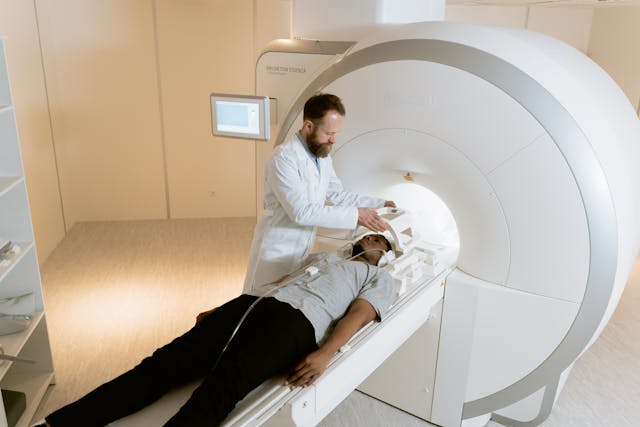
Modern imaging technologies have handed researchers an unprecedented window into biological processes at the cellular and molecular levels. Advanced microscopy techniques like super-resolution microscopy and cryo-electron microscopy now let scientists observe individual proteins, DNA strands, and cellular structures with near-atomic clarity. These visualization breakthroughs have transformed how we understand disease mechanisms, revealing exactly how pathogens invade cells, how cancer spreads through tissue, and how neurons fire and communicate within neural networks. Three-dimensional imaging systems can create detailed maps of entire organs or tissue samples, enabling researchers to track disease progression in ways that seemed unimaginable just twenty years ago.
Automation and High-Throughput Screening
Laboratory automation has fundamentally transformed medical research from predominantly hands-on work into a highly efficient, standardized process that generates reliable results at impressive scale. Robotic systems now conduct thousands of experiments simultaneously, testing drug candidates, analyzing genetic samples, or screening for biomarkers with minimal human involvement. High-throughput screening platforms enable researchers to evaluate entire libraries of chemical compounds against specific biological targets in days instead of years. These automated systems don’t just speed things up; they improve consistency and reproducibility, tackling one of science’s most stubborn challenges head-on. Automated liquid handling systems ensure precise measurements and eliminate human error in critical experimental procedures. When validating therapeutic candidates, scientists conducting preclinical research depend on these automated platforms to maintain standardized testing protocols across multiple experimental conditions. The marriage of automation with data management systems creates seamless workflows where experimental results are immediately captured, analyzed, and stored in searchable databases. This technological infrastructure supports ambitious collaborative research projects where teams across multiple institutions can access and contribute to shared datasets. The efficiency gains from automation have empowered research institutions to tackle more ambitious projects and explore a broader range of experimental approaches than resource constraints would’ve previously allowed.
Wearable Technology and Remote Patient Monitoring
The explosion of wearable health technology has opened up entirely new possibilities for conducting clinical research and gathering real-world health data. Smartwatches, fitness trackers, and specialized medical sensors continuously monitor vital signs, activity levels, sleep patterns, and physiological markers in patients’ everyday environments. This constant data stream provides researchers with rich, longitudinal datasets that capture health variations over time rather than just isolated snapshots during clinical visits. Remote monitoring technologies let clinical trials include participants from diverse geographic locations, boosting study diversity and breaking down traditional barriers to research participation.
Cloud Computing and Collaborative Research Networks
Cloud computing infrastructure has smashed traditional barriers to scientific collaboration, enabling researchers worldwide to share data, computational resources, and analytical tools without missing a beat. Massive biological databases stored in the cloud allow scientists anywhere to access genomic sequences, protein structures, clinical trial data, and research findings without maintaining expensive local infrastructure. This democratization of scientific resources has leveled the playing field in remarkable ways, giving researchers at smaller institutions access to the same information and tools available at major research powerhouses. Cloud-based collaboration platforms enable multinational research teams to tackle complex projects together, sharing results instantly and building upon each other’s discoveries in real-time.
Conclusion
The technological transformation of medical research stands as one of the most significant leaps forward in scientific history, fundamentally reshaping how we understand disease and develop treatments. From artificial intelligence that forecasts drug effectiveness to imaging systems that reveal cellular processes in breathtaking detail, technology has become impossible to separate from modern medical discovery. The automation of laboratory processes, the collaborative power of cloud computing, and the insights streaming from wearable health technology have collectively created a research ecosystem capable of tackling humanity’s toughest health challenges. As these technologies continue evolving and new innovations emerge, medical discovery will only accelerate, bringing hope for treatments and cures that would’ve seemed like pure science fiction just decades ago.